
Act I: Occupational Hazards
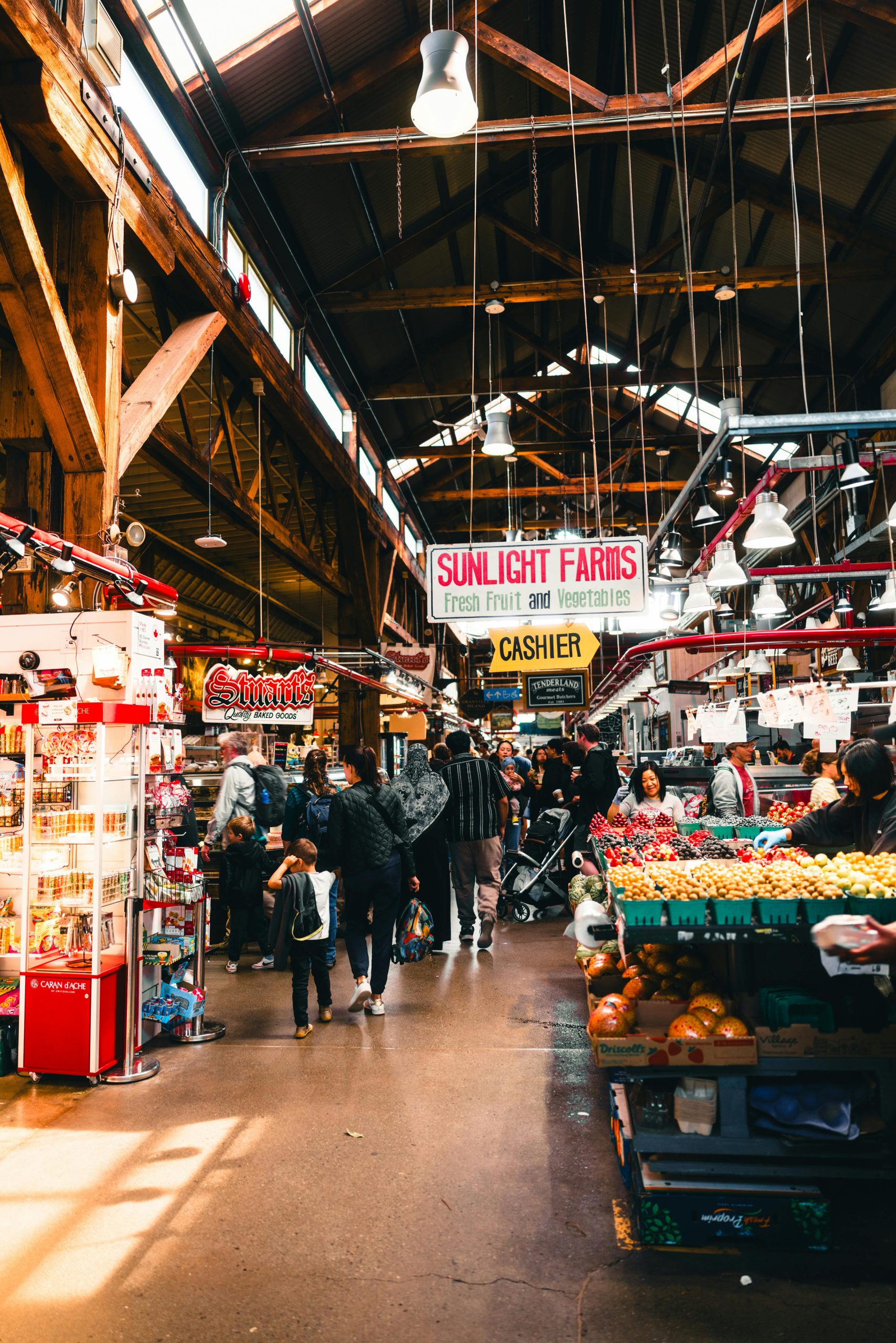
Kanwal contemplated who deserved a box of biryani to the face more; the tourists in front of her, or the seagulls above. Arms aching and out of breath, she tried to overtake the group of teenagers meandering between stalls of primrose, honey and cheese. Her scowl deepened at the piercing squawks of seagulls behind her, poised to nosedive toward the smell of cardamom and cinnamon wafting from the boxes towered in her arms. She jostled through a fleeting gap between sticky bodies. This assault of senses was Granville Island’s summer market.
“I don’t know why I decided to do this,” she groaned, her arms giving out as she aimed the heavy boxes for the long table. Amanda’s arm shot out to stop them from toppling over the standing banner that read, AMMA’S BIRYANI.
“You say that at the start of every summer and yet,” Amanda added the boxes to display racks, “by Labour Day, you declare it wasn’t that bad and start planning for the next year.”
“That’s because then I only have sixteen-hour days in class and labs to look forward to.” Kanwal sank onto a steel counter stool and wiped the sweat from her brow. She reached for her water bottle, took a swig of tepid water and grimaced. The strong smell of algae and fish in the briny humid air was so dense, it tasted like a coat of oil on her tongue.
“Speaking of labs,” Amanda stood against the table of Kanwal’s stall, crossing both her arms and legs. “Are we going to talk about why you turned down Devin’s offer to work with him? He’s always complaining about how he needs more researchers, and he really thought you’d be on board.”
“I hated disappointing him, and I was tempted.” Devin was her undergraduate supervisor. He offered for her to continue researching glaucoma in South Asian communities as part of a fellowship program. Researching glaucoma was the reason she had gone into ophthalmology, after her Nani had lost her sight to the disease. Turning down his offer had surprised them both. “But you know it wasn’t part of my -”
“Your plan. Yes, I know,” Amanda interrupted. “Sometimes I wonder if you do anything you haven’t put on a list first.”
Before Kanwal could deny her best friend’s claims, they were interrupted by the market’s head organizers. Kanwal had never seen the older woman without a canary yellow clipboard clutched against her chest, the pen in her other hand slicing the air as she spoke.
“Ladies, we’ve had a bit of a hiccup and it’s not like me to blame others, but I think it’s only fair that I be honest and tell you that this is all Henry’s fault.” Lucinda’s words came out in a hurried jumble.
“Thank you for that very helpful comment, honey. It’s almost like you look for buses to push me under.” Henry glared at his wife before turning to Kanwal. “There was a mix up with the floor plan and we double booked this spot. The other business signed up before you so it’s only fair that we give them the space.”
“That hardly sounds fair to me,” Kanwal exclaimed, hands on her hips. “Who are they?”
“Some mochi place. Couple of Japanese kids.”
“Hang on a minute, you’re picking a bunch of rookies over someone who’s drastically elevated your market’s Halal food scene?” Amanda demanded. She came and stood next to Kanwal, mirroring her stance.
“And even worse, you’re pitting one minority business owner against another?” Kanwal added. “Real classy, Henry.”
Kanwal’s accusation sent the stout, sweaty man into a full heatstroke. His ruddy face swelled and his eyes became glassy. “Now hang on a second, you two. It’s not about that and you know it. These things happen, alright? It was an honest to goodness mistake and now we’re one stall spot short. What do you expect me to do?”
“Oh, I don’t know. How about canning one of the infinite number of soy candles or coffee roasters you have sprawling around this place?” Kanwal asked.
“Exactly,” Amanda chimed in. “How many of those do the people really need? What?” She leaned over and glowered at their stall neighbors, Kelly and Karen, of Kelly and Karen’s Kandles. Their blue eyes widened and they dropped any pretense of not eavesdropping. “This is so disappointing, Henry. At least give people like us a chance.”
Kanwal suppressed a smile. Amanda may have looked like she could be related to Kelly and Karen, but she had been Kanwal’s biggest cheerleader since they met in first year at the University of British Columbia. When Amma’s Biryani opened, they handed out promotional pamphlets and twirled signs along the Vancouver seawall with a gusto that rivalled the Island’s buskers.
Henry threw his hands up. “Look, I’m real sorry kid, but I don’t know what to tell you. Add this to my tab.” He swiped a samosa as he left.
“He really does feel awful. You know we’ve always liked you and what you’ve done with this place.” Lucinda patted Kanwal on the shoulder. “I was thinking though, how about partnering with a larger stall? You know Fine Falafel, the folks that own the Fine Food restaurants? I’m friends with the owner and I think they could be open to the idea. You could talk to her son, Mazen? He seems to be running things these days.”
Kanwal managed a polite nod before Lucinda walked away. Over the staccato screeches of birds and the chatter of tourists, the weight of Henry’s words settled in the pit of her stomach.
“Talking to Mazen is worth thinking about,” Amanda nudged Kanwal’s shoulder. Her eyes widened at something behind her. “But you have about thirty seconds before you need to make a decision because he’s coming this way and who knows if you’ll even be around next week to ask him then.” She winked. “I’ll go check on the van. You’ve got this.”
Amanda strode away towards the parking lot, her high ponytail swaying side to side. In a daze, Kanwal looked back at the lanky figure bobbing in and out of focus above the crowds towards her. There was something about the way that Mazen ambled through the market’s chaos that always made her smile. An unrushed, steady lope. Hunched shoulders and an unassumming air that crowds parted for nonetheless. She took a deep breath and wiped her clammy hands on her black cargo pants as he came and stood in front of her. From under the wayward dark curls that fell across his forehead, his eyes shone like warmed chestnuts. Her heart began to sputter when she realized she was staring.
“It’s good to see you-”
“The usual?” Her voice sounded sharp and impatient and she mentally kicked herself when his dimpled smile froze. “Sorry, four boxes, right?” she added in a softer tone. He nodded, resting his elbows on the counter. Whenever he wasn’t hunched over above others, he was leaning against something.
She turned and silently assembled his order. It was the same one he made every weekend of the summer market since Amma’s Biryani started. However, their conversations never progressed beyond small talk so awkward and stilted it made Kanwal question how she functioned in society. Present company not included, she prided herself on being able to charm even the most difficult of customers: the moody teenager who would rather have pizza, the desi aunty who considered the inclusion of potatoes in biryani a personal attack on her lineage, even the self-proclaimed foodie who thought oregano was as adventurous as spices should go.
When Kanwal was nine years old, she had convinced her parents to take her to Wonderland, specifically to ride the Leviathan, the largest rollercoaster in Canada. In her excitement for the trip, she had barely slept the week leading up to it. But then she got there and saw the almost ninety-degree drop from three hundred feet, other children bawling after the ride, and a fully grown man throwing up in an oversized popcorn bag. The experience she had spent her summer dreaming about suddenly filled her with a dread so acute and paralyzing that she parked herself on a bench with a giant cup of churros, refusing to leave until it was time to go home.
For Kanwal, Mazen was the Leviathan in human form: fun to fantasize about, but a reality beyond minimal small talk carried very serious risks of falling too hard, crying, and possibly puking.
She took the cash from his outstretched hand, handing him the brown paper bag. They both remained quiet. From the corner of her eye, she could feel Kelly and Karen’s gaze on her. Their sun-streaked blonde heads were tucked close together as they whispered. They quickly looked away when Kanwal frowned at them.
When Kanwal was ten, she had returned to Wonderland with a renewed determination and rode the Leviathan five times in one sweltering July afternoon.
The same sense of urgency bubbled up inside of her now, making her stand taller. She had built Amma’s Biryani, and even if seagulls would hound her every weekend, or the indoor market sometimes felt like the inside of an air fryer, this summer could not go to waste.
Because it was her final summer in Vancouver before returning to Toronto, and she wasn’t ready to say goodbye to Amma’s Biryani. Not yet.
She just had to muster the courage to talk like a perfectly regular, normal human being to the boy she had spent summers preferring to fantasize about from afar.
“Wait,” she called, as Mazen turned to leave. “I have a proposal for you.”
Mazen turned back with wide eyes and she swallowed the embarrassment of her word choice.
So much for being normal.
Continue with Part 2 →

